
One of the most common questions I get at Rough Around the Edges is: “How much does a custom wood table cost?” If you’ve ever searched something like custom wood table Ottawa prices or live edge dining table Montreal, you’ve probably realized the answer isn’t so straightforward.
The truth is, custom furniture doesn’t have a fixed price tag, and that’s part of the beauty. You’re not buying a mass‑produced item from a warehouse. You’re commissioning something handcrafted, built to last, and made specifically for you. And there are a few key things that impact what you’ll end up paying.
Why It’s Not Straightforward
When you search for custom wood tables, you’ll see a wide spread in pricing. That’s because:
- Wood type & availability
A slab of locally sourced walnut or black walnut is much more expensive than domestic oak or maple. Exotic or hard-to-find woods carry rarity premiums. And if you want live edge features (keeping the natural edge of the log), that brings in more labor and material waste. - Dimensions & thickness
A 5-ft dining table vs. a 10-ft banquet table — that’s a lot more wood, more joinery, more material cost, more weight. Thickness (1″, 1.5″, 2″, more) also affects cost. - Design complexity & features
Do you want hidden leaves, butterfly joints, inlays, epoxy fills, metal legs, custom stain or finishing, bookmatches, or other details? Every extra design element adds labor, technique, and time. - Joinery & construction
Simple butt joints cost less. Floating tenons, mortise-and-tenon, breadboard ends, spline joints — these take more skill, more time, sometimes special tools. - Finishes & surface treatment
A basic oil finish vs. multiple coats of hand-rubbed poly, custom coloring, distressing, or high-gloss lacquer: different labor, different materials. - Logistics & shipping
If the piece is heavy or large, transportation or handling may drive up the cost. Installation might also be needed. In remote or hard-to-reach spots, that adds time. - Local market, overhead, and demand
Costs for labor, shop rent, and local demand in your area (Ottawa, Montreal, etc.) affect pricing too.
So when you see wide variation in quotes, that’s why.
1. The Wood Itself
It all starts with the wood. Different species come with different price points, availability, and working characteristics. I often work with black walnut, maple, oak, and sometimes more rare or reclaimed materials, depending on what the client wants.
If you’re in Ottawa or Toronto and looking for a big live edge slab for a dining table, black walnut is a classic. It’s rich, dark, and timeless, but it also costs more than, say, ash or soft maple. For folks in Montreal or Kingston looking to balance budget and beauty, I sometimes recommend a high‑quality hardwood veneer over solid core, or a more affordable species with beautiful grain.
2. The Size of the Piece
The next major factor is size. A table for a downtown condo in Toronto won’t require the same dimensions as one for a Kanata family home or a sprawling farmhouse outside Kingston.
Larger tables mean more material, more time on the jointer and planer, and often, more complexity during delivery and installation. Some pieces need extra hands just to move safely. All of this adds up.
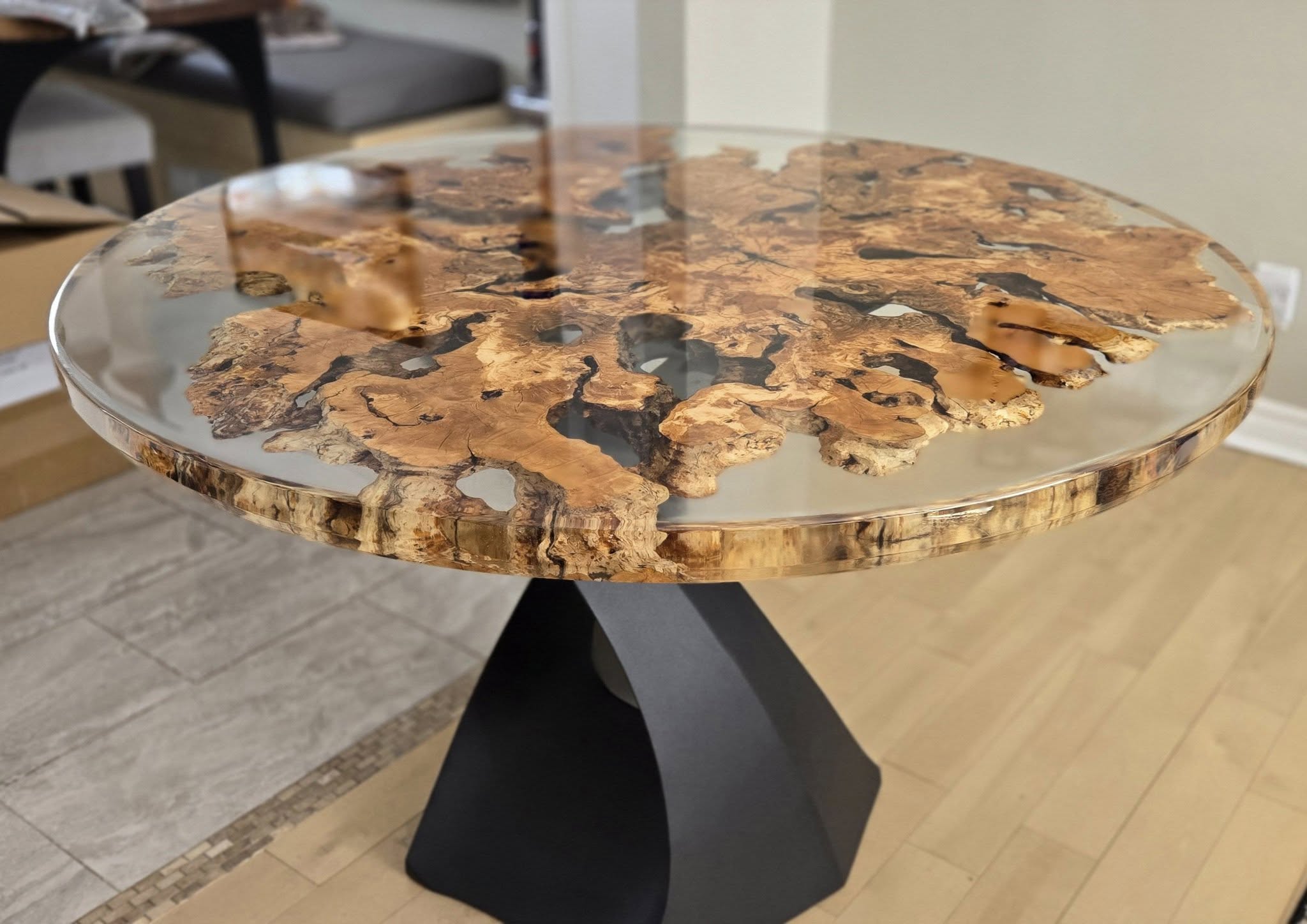
That said, even small pieces, like a custom entryway table or a round café‑style table — can be made incredibly special with the right design and finishing touches.
3. Design Details and Complexity
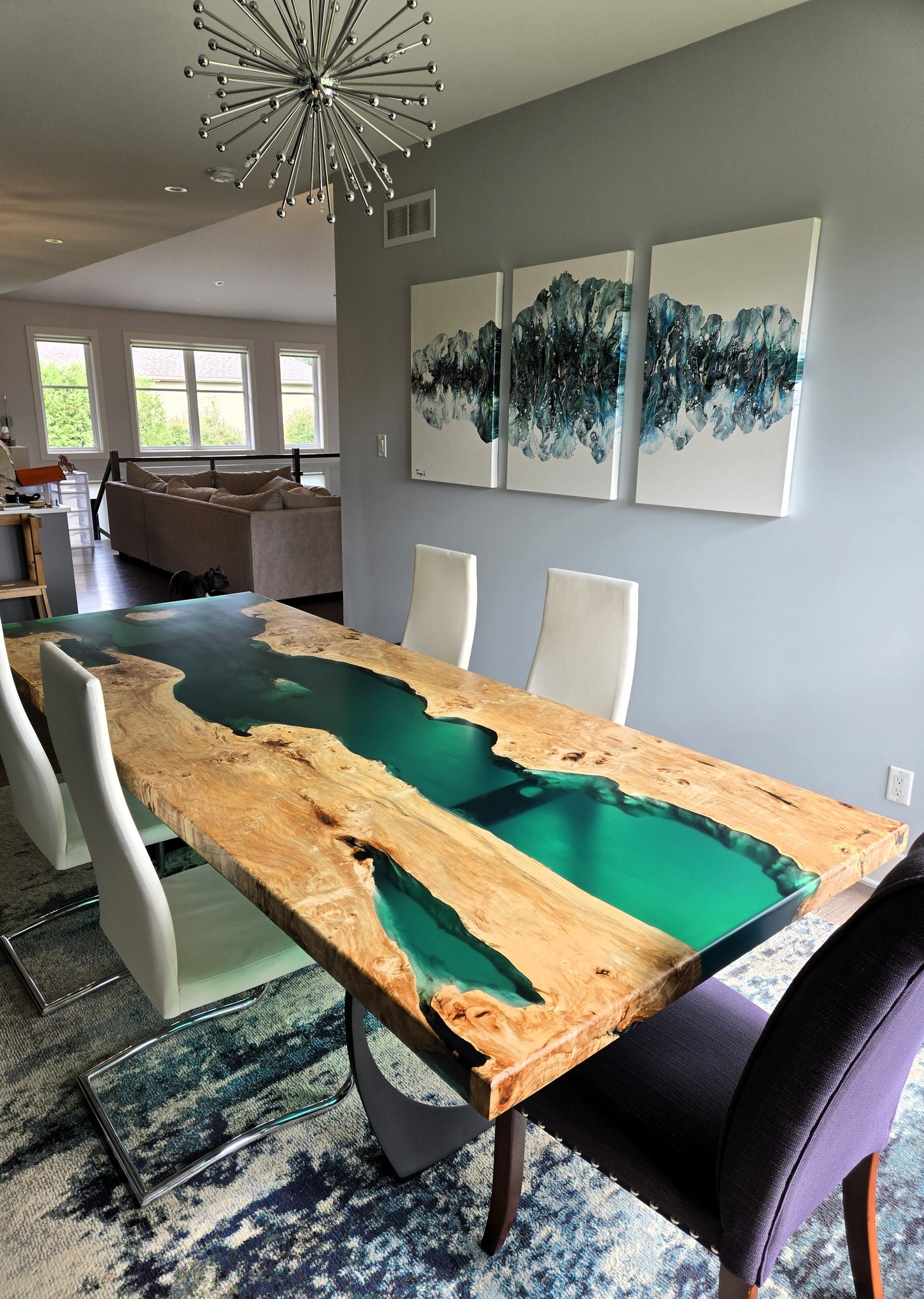
This is where your vision really starts to shape the budget. Do you want a simple slab table with a clean, natural edge? Or are you dreaming of a resin river running through the center, suspended objects inside, or a hand‑carved base that turns it into functional art?
Epoxy tables — especially the ones I build for clients in Barrhaven and Orleans — take more time to cast, cure, and demold. They require a different level of precision. Complex bases, inlays, and custom joinery all increase the value (and the labour). But they also take the piece from beautiful to unforgettable.
4. Customization and Finishing Work
A lot of people don’t realize how much time goes into the finish. From sanding and oiling to fine-tuning the final look, this is where the character of the wood really shines through. Some clients request specific colour matches, custom stain formulas, or want the base powder coated in a particular tone.
In one project I did in Orleans, the client had coasters they loved, and we matched the colour of the tabletop to them perfectly. That kind of detail takes more effort, but it makes all the difference.
I’ve also added features like built-in lazy Susans, matching benches, and even hidden compartments for clients who wanted something completely their own.
5. Delivery and Logistics
Finally, we’ve got to talk about getting the finished piece into your home. I personally handle deliveries around Ottawa, Barrhaven, Kanata, and the surrounding areas. For longer distances, Toronto, Montreal, Kingston, I work with trusted shipping partners to crate and deliver safely.
Larger or more fragile tables require custom crating, especially when epoxy is involved. It’s worth it to protect the work we’ve put in.
So What Should You Expect to Pay?
There’s no simple answer, but most custom tables I build fall in the $2,500 to $8,000+ range depending on all of the above factors. A small minimalist piece might come in under that. A large, complex river table with a sculpted base could go well above.
But here’s what I can promise: you’ll never find a piece exactly like yours in a big box store. Every table I make is made by hand, from real wood, with care, and you’ll feel that difference every time you sit down at it.
Let’s Talk About Your Table
If you’re in Ottawa, Toronto, Montreal, Kingston, Kanata, Barrhaven, or Orleans, and have been dreaming about a custom table that tells your story, I’d love to hear about it.
Each project starts with a conversation and ends with a piece built to last for generations.
Reach out anytime, let’s build something that fits your life perfectly.