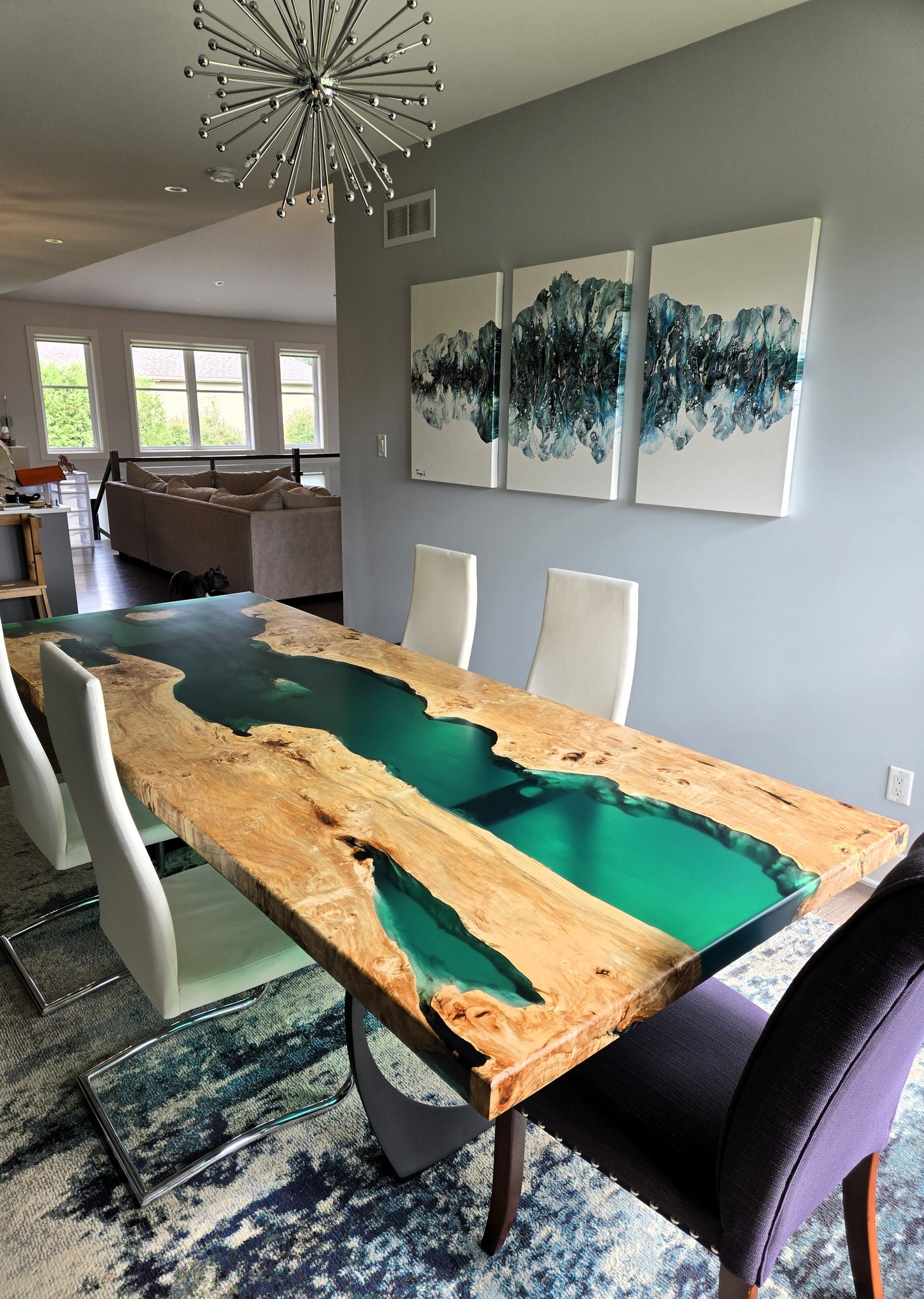

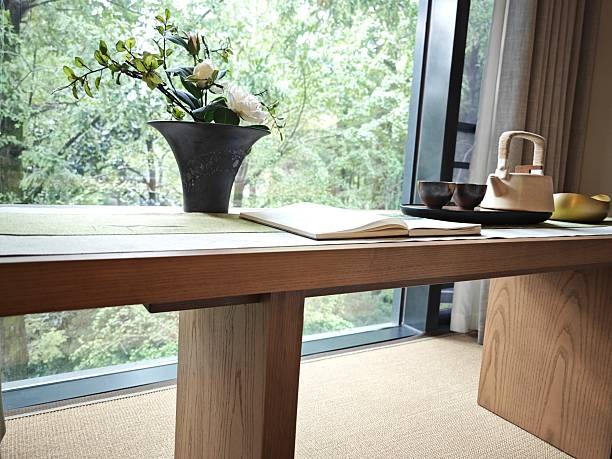
When homeowners begin designing a custom dining table, they often focus first on the overall size, shape, wood species, finish, or whether they prefer a live edge or epoxy river design.
One detail that receives less attention—but has a surprisingly large impact—is tabletop thickness.
Thickness influences far more than appearance. It changes the visual weight of the table, affects how substantial the piece feels, influences the relationship between the top and the base, and can completely alter the personality of the finished design.
At Rough Around the Edges, we specialize exclusively in handcrafted tables, including custom dining tables, solid wood tables, live edge tables, epoxy river tables, round tables, rectangular tables, and one-of-a-kind custom tables.
We proudly serve homeowners throughout Ottawa, Kanata, Nepean, Orléans, Barrhaven, Stittsville, Manotick, Carp, Rockland, Russell, Kemptville, and communities across Canada.
For homeowners planning a custom table, understanding the role of tabletop thickness can help create a piece that feels more intentional, balanced, and appropriate for the home.
Table Thickness Changes the Entire Personality of the Piece
Imagine two dining tables with the same length, width, hardwood, and finish.
One has a thinner top.
The other has a much more substantial profile.
Even though the dimensions are otherwise identical, the two tables can feel completely different.
A thinner tabletop may create a lighter, more refined appearance.
A thicker top can feel stronger, more architectural, and more grounded.
Neither is automatically better.
The correct choice depends on the room, the base, the hardwood, and the homeowner’s design goals.
This is why thickness should be treated as a deliberate design decision rather than a technical afterthought.
Visual Weight Matters in Large Dining Rooms
Large dining spaces often require furniture with enough presence to feel proportional.
A very light-looking table can sometimes appear undersized even when its dimensions are technically appropriate.
This is especially true in homes with:
- High ceilings
- Large windows
- Open-concept layouts
- Expansive kitchens
- Substantial architectural features
In these environments, a thicker solid wood tabletop can help the table hold its place visually within the room.
For larger homes in Manotick, Carp, Stittsville, or Kanata, this additional presence can make the dining area feel more complete.
The table becomes a strong anchor rather than simply another piece of furniture.
Thinner Tops Can Create a More Refined Look
Not every room benefits from visual heaviness.
In smaller dining spaces, a more refined tabletop profile may help the room feel open and less crowded.
A thinner top can also complement:
- Contemporary architecture
- Minimalist interiors
- Lighter furniture
- More delicate chair designs
- Compact dining rooms
For homes in Ottawa, Nepean, or more space-conscious layouts, this can create a cleaner and more balanced result.
The important point is that table thickness should respond to the room rather than follow a one-size-fits-all approach.
The Base and Top Need to Feel Related
One of the most important relationships in a custom table is the balance between the tabletop and the base.
A substantial top on a very delicate base may feel visually disconnected.
A lighter tabletop on an oversized base can create the opposite problem.
The two elements should feel like they were designed together.
At Rough Around the Edges, the base is never considered independently from the top.
We look at:
- Overall dimensions
- Tabletop thickness
- Base scale
- Legroom
- Seating positions
- Visual balance
The goal is to create a complete piece rather than two unrelated components.
Thickness Can Highlight Natural Hardwood
Solid hardwood has depth and physical presence.
A thicker tabletop can emphasize that authenticity because the edge reveals more of the material.
This is especially effective with hardwood that contains:
- Rich grain movement
- Natural colour variation
- Distinctive knots
- Organic markings
- Strong visual character
When the edge profile reveals more material, the table can feel more sculptural.
This is one reason substantial solid wood tops often become such strong focal points in dining spaces.
Live Edge Tables Benefit From Thoughtful Thickness
A live edge table already carries a strong natural identity.
The irregular perimeter reveals the organic form of the wood.
Thickness adds another dimension to that character.
A substantial live edge top can feel powerful and natural, almost like a preserved section of the tree itself.
A more refined live edge profile can create a softer, contemporary interpretation.
The ideal thickness depends on the slab, the room, and the overall design direction.
For homes in Manotick, Carp, Russell, or Kemptville, where natural materials may already play a strong role in the interior, thickness can help determine whether the live edge table feels rustic, modern, or somewhere in between.
Epoxy River Tables Need Balance Between Wood and Resin
In an epoxy river table, tabletop thickness contributes to the overall visual depth of the epoxy as well as the hardwood.
A thicker top may create a stronger sense of depth in the resin feature.
This can make the epoxy river feel more sculptural and dimensional.
However, the table still needs to feel balanced.
If the top becomes visually heavy, the base must support that presence both structurally and aesthetically.
A successful epoxy river table should feel cohesive from every angle, not simply dramatic from above.
Round Tables Create Their Own Thickness Considerations
A round custom dining table is viewed from all directions.
There is no obvious front or back.
Because of this, the edge profile becomes especially visible.
A thicker round top can create strong visual presence and emphasize the circular form.
A thinner profile can make the table feel more elegant and light.
The correct choice depends on:
- Diameter
- Base design
- Chair style
- Room size
- Overall aesthetic
For square dining rooms or compact layouts throughout Ottawa and surrounding communities, a carefully proportioned round table can create excellent balance.
Thickness becomes part of that proportion.
Rectangular Tables Can Use Thickness to Emphasize Length
A rectangular custom table already creates strong horizontal movement.
Its length naturally draws the eye from one end to the other.
A substantial tabletop can emphasize this line even more.
This can work particularly well in elongated dining rooms or open-concept homes where the table needs to visually define the dining area.
A more refined top, on the other hand, can help a long table feel less visually dominant.
Again, the goal is not maximum thickness.
It is appropriate thickness.
Thickness Affects How the Table Looks From the Side
Many people imagine a dining table from above because that is how tabletops are often photographed.
In real homes, however, the table is frequently viewed from the side.
From the kitchen, living room, hallway, or entrance, the edge profile may become one of the most noticeable parts of the table.
This is particularly important in open-concept homes throughout Kanata, Barrhaven, Orléans, and Stittsville.
A thicker tabletop may create a bold architectural line.
A thinner profile may feel more understated.
Homeowners should think about how the table will be seen from across the room, not only while standing directly beside it.
Chair Style Can Influence the Right Thickness
Dining chairs are part of the visual composition.
A substantial table paired with very delicate chairs can create intentional contrast, but the proportions still need to feel balanced.
Likewise, heavier upholstered chairs may visually support a more substantial tabletop.
The relationship between chairs and table affects:
- Visual weight
- Scale
- Overall style
- Room balance
A custom table should therefore be considered alongside the seating that will surround it.
Even if chairs are replaced later, the initial relationship can help guide the design.
Thickness Can Make a Table Feel More Architectural
In contemporary homes, furniture often functions almost like interior architecture.
A substantial custom table can define space through its shape, scale, and material presence.
A thick solid wood top can create:
- Strong horizontal emphasis
- Visual grounding
- Structural character
- A sculptural appearance
This can be particularly effective in large open spaces where furniture needs to create definition without walls.
The table becomes part of the architecture rather than simply something placed inside it.
Smaller Rooms Need Proportion, Not Miniature Furniture
One mistake homeowners sometimes make is assuming that a smaller room requires an extremely delicate table.
That is not always true.
A compact dining space can still support a table with character and substance.
The key is proportion.
A moderately substantial top may work beautifully if the overall dimensions remain appropriate and circulation is preserved.
Custom design allows these elements to be adjusted individually.
The table does not need to look fragile simply because the room is smaller.
Surface Thickness and Everyday Comfort Work Together
Tabletop thickness also needs to make sense in relation to table height and seating.
The goal is comfortable dining.
A table should provide appropriate clearance for knees while maintaining a proportionate appearance.
This becomes especially important when using substantial tops or certain base designs.
The relationship between:
- Top thickness
- Overall table height
- Base structure
- Chair height
- Legroom
should be considered together.
Great design is not only visible.
It is also experienced while sitting at the table.
Canadian Homes Offer Many Different Design Contexts
Homes throughout Ottawa and across Canada vary significantly.
A contemporary Kanata home may support a clean, substantial tabletop with an architectural base.
A traditional Nepean dining room may call for different proportions.
A larger Manotick or Carp property may benefit from greater visual weight.
Homes in Barrhaven, Orléans, Rockland, Russell, Kemptville, and Stittsville each present their own combination of room size, architecture, natural light, and lifestyle.
This diversity is exactly why tabletop thickness should not be standardized.
Custom craftsmanship allows it to respond to the actual environment.
Natural Light Can Emphasize the Edge Profile
Light affects how thickness is perceived.
A substantial edge can cast subtle shadows and reveal the depth of the hardwood.
In bright rooms with large windows, this can create beautiful variation throughout the day.
Morning light may emphasize one side of the table.
Afternoon sun may highlight the opposite edge.
Artificial lighting at night can create another appearance entirely.
This interaction between light and material helps make handcrafted solid wood feel dynamic rather than static.
Thickness Should Support the Design, Not Become the Design
There is a temptation with custom furniture to make every feature dramatic.
A very thick tabletop may create immediate impact.
But impact alone does not guarantee good design.
The best thickness is the one that supports the rest of the table.
It should work with:
- Room scale
- Hardwood character
- Base proportions
- Seating
- Table shape
- Interior architecture
Sometimes the right answer is substantial.
Sometimes it is refined.
The important part is that the choice feels intentional.
A Custom Table Lets Every Proportion Be Considered
This is one of the biggest advantages of custom craftsmanship.
Homeowners are not limited to standard combinations of:
- Length
- Width
- Height
- Thickness
- Base style
Each dimension can be considered as part of the whole.
That flexibility allows the table to feel more balanced and more connected to the home.
Instead of accepting whatever proportions happen to come with a pre-made design, the table can be created around the room and the people who will use it.
Rough Around the Edges Focuses Exclusively on Tables
At Rough Around the Edges, tables are our specialty.
We create handcrafted:
- Custom dining tables
- Solid wood tables
- Live edge tables
- Epoxy river tables
- Round tables
- Rectangular tables
- One-of-a-kind custom tables
We proudly serve homeowners throughout Ottawa, Kanata, Nepean, Orléans, Barrhaven, Stittsville, Manotick, Carp, Rockland, Russell, Kemptville, and communities across Canada.
Every table begins with a different combination of space, hardwood, shape, and design goals.
Tabletop thickness is one of the details that helps bring those elements together.
The Right Thickness Makes the Table Feel Complete
Table thickness may seem like a small design choice.
In reality, it affects almost everything.
It influences visual weight.
It changes how the hardwood is experienced.
It affects the relationship with the base.
It contributes to the table’s architectural presence.
It changes how the piece looks from across the room.
And it helps determine whether the finished table feels refined, substantial, dramatic, or understated.
That is why custom table design works best when no dimension is treated as an afterthought.
The tabletop should feel right from above.
From the side.
From across the room.
And most importantly, when people sit down and use it every day.
Ready to Design the Right Proportions for Your Custom Table?
If you are considering a handcrafted custom dining table, solid wood table, live edge table, epoxy river table, round table, or rectangular table, Rough Around the Edges can help create proportions designed specifically for your home.
We proudly serve homeowners throughout Ottawa, Kanata, Nepean, Orléans, Barrhaven, Stittsville, Manotick, Carp, Rockland, Russell, Kemptville, and communities across Canada.
Call Rough Around the Edges at (343) 500-7325 to discuss your space and begin creating a custom table where tabletop thickness, dimensions, natural hardwood, base design, and everyday function come together beautifully.