
A custom dining table is often defined by details that may seem small at first glance. One of those details is the edge profile.
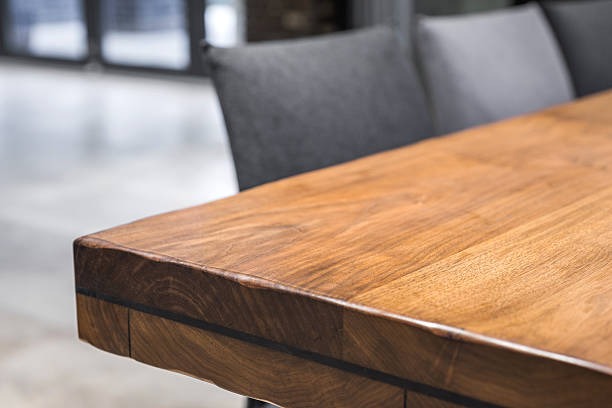
The edge is the transition between the top surface of a table and its sides. Because it runs around the perimeter of the tabletop, it influences how thick the table appears, how its shape is perceived, and whether the finished piece feels contemporary, traditional, organic, bold, or refined.
For homeowners planning a custom solid wood dining table, the edge deserves careful consideration.
At Rough Around the Edges, we specialize exclusively in handcrafted tables, including custom dining tables, solid wood tables, live edge tables, epoxy river tables, round tables, rectangular tables, and one-of-a-kind custom tables.
We proudly serve homeowners throughout Ottawa, Kanata, Nepean, Orléans, Barrhaven, Stittsville, Manotick, Carp, Rockland, Russell, Kemptville, and communities across Canada.
Understanding how different edge treatments influence a table can make it easier to create a design that feels right for both the home and the people who will use it.
What Is a Table Edge Profile?
A table edge profile refers to the way the perimeter of the tabletop is shaped and finished.
At first, this may sound like a minor detail.
However, imagine looking at a table from across a dining room. The tabletop edge creates one of the strongest horizontal lines in the entire piece.
Change that line, and the personality of the table changes with it.
An edge can appear:
- Straight and substantial
- Soft and rounded
- Clean and contemporary
- Organic and irregular
- Visually lighter
- Bold and architectural
This is why edge selection should be considered as part of the overall custom table design.
A Straight Edge Creates a Clean, Strong Look
A straight edge is one of the most versatile choices for a solid wood table.
It allows the natural thickness and character of the tabletop to remain visible without introducing unnecessary visual complexity.
The result can work beautifully in contemporary, transitional, and more traditional interiors.
A substantial straight edge can emphasize the physical presence of solid hardwood, while a more refined profile can create a cleaner and lighter appearance.
For homeowners who want the wood grain to remain the primary visual feature, simplicity around the perimeter can be particularly effective.
Rounded Edges Can Soften the Table’s Appearance
Dining rooms contain many straight lines.
Walls, windows, flooring, kitchen cabinets, islands, doorways, and countertops all contribute to the geometry of a home.
A gently rounded table edge can introduce softness into that environment.
The effect does not necessarily need to be dramatic.
Even a subtle rounding of the edge can change how the table feels visually and physically.
This approach may be particularly appealing in homes where homeowners want a solid wood table with a comfortable, approachable character rather than an extremely sharp architectural appearance.
Edge Profiles Can Change How Thick a Table Looks
The previous article explored how tabletop thickness influences the overall presence of a custom dining table.
Edge design can take that concept even further.
Two tabletops with similar physical thickness can appear quite different depending on their edge treatment.
A strong vertical edge emphasizes the full depth of the tabletop.
A shaped or softened profile can visually reduce some of that weight.
This means homeowners can achieve a substantial solid wood surface without necessarily creating an overly heavy-looking table.
The edge becomes a useful design tool for controlling visual proportion.
Live Edge Tables Take a Completely Different Approach
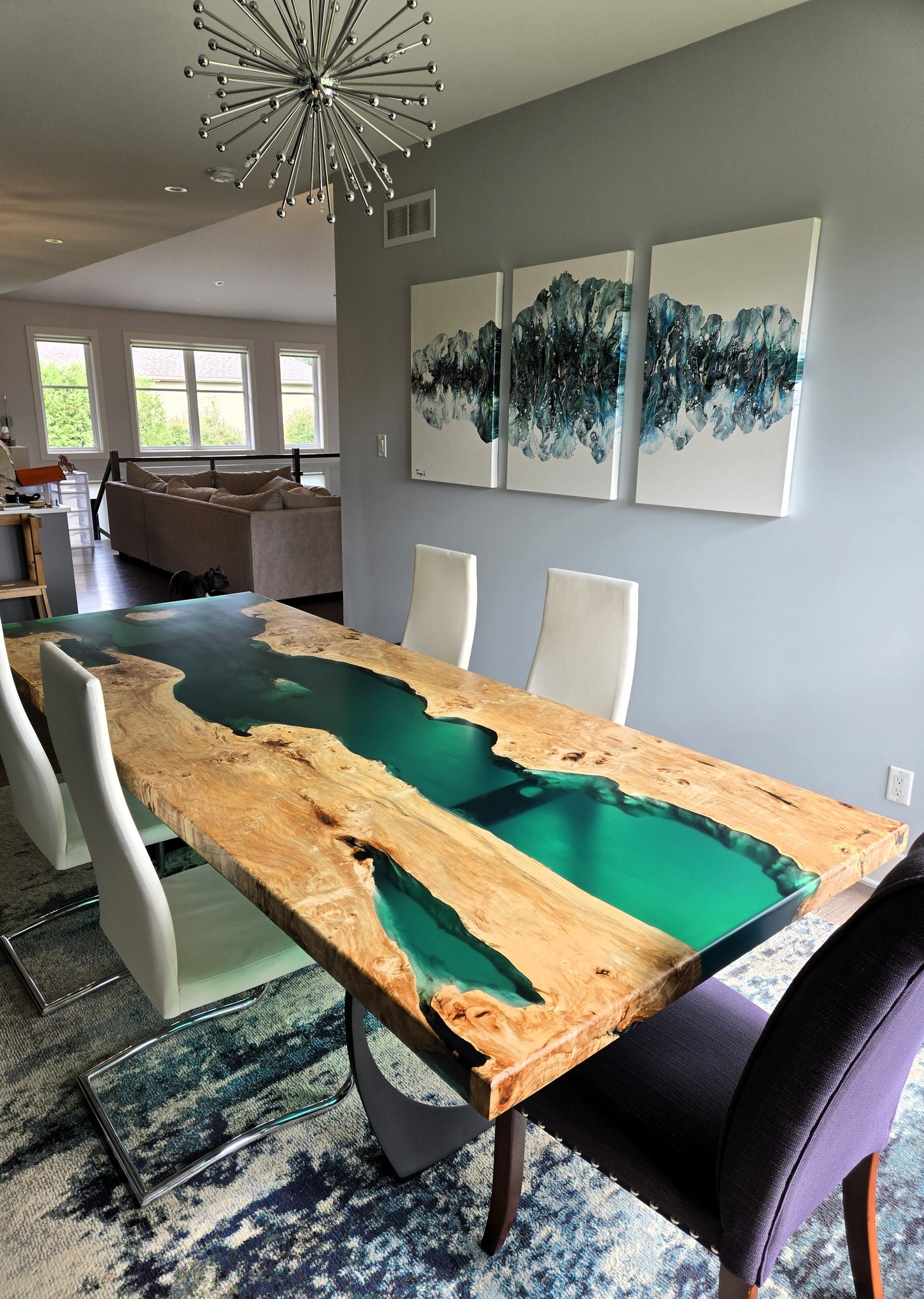
A live edge table celebrates the natural perimeter of the wood rather than creating a uniform manufactured line.
The result can include curves, subtle irregularities, and organic movement that reflects the original character of the material.
This makes every live edge tabletop distinctive.
For homeowners throughout Ottawa, Manotick, Carp, Russell, and Kemptville who appreciate natural materials, a live edge table can create a strong connection between the interior and the organic character of hardwood.
However, live edge does not automatically mean rustic.
Combined with contemporary architecture and a thoughtfully designed base, a live edge table can feel remarkably modern.
Natural Does Not Have to Mean Rough
The term “live edge” sometimes creates the impression of an unfinished or extremely rugged piece of wood.
That does not have to be the case.
A handcrafted live edge table can preserve natural contours while still feeling polished and intentional.
The goal is to retain the personality of the hardwood while creating a surface appropriate for everyday dining.
That balance between natural irregularity and refined craftsmanship is one of the characteristics that makes live edge tables so distinctive.
Edge Profiles Matter on Rectangular Tables
A rectangular custom dining table naturally creates strong horizontal and vertical lines.
The edge treatment can either reinforce those lines or soften them.
A clean straight profile can strengthen the architectural character of the table.
A softer profile can reduce the visual rigidity of a long rectangular top.
A live edge can introduce organic movement along the length of the table.
The correct approach depends on what the homeowner wants the table to contribute to the room.
In open-concept homes throughout Kanata, Barrhaven, Stittsville, and Orléans, this becomes particularly important because the dining table may be visible from several adjoining areas.
Round Tables Make the Edge Visible From Every Direction
The edge of a round custom dining table is especially important because there is no dominant front or side.
People see the perimeter from virtually every position in the room.
A smooth, thoughtfully finished edge can reinforce the continuous shape of the tabletop.
A softer profile may complement the natural flow of the circular design, while a stronger edge can give the table greater visual weight.
Because round tables are often chosen to soften rooms dominated by straight architectural lines, the edge can help strengthen that effect.
Epoxy River Tables Need an Edge That Supports the Design
An epoxy river table already contains significant visual interest.
Natural hardwood and epoxy interact across the tabletop, creating movement, contrast, and depth.
Because the surface itself is visually active, the edge should support the design rather than compete with it.
The edge also reveals another perspective of the materials.
From the side, homeowners and guests may see the thickness of the hardwood and the depth of the epoxy.
This makes the perimeter part of the visual experience.
A thoughtful edge treatment helps the epoxy feature remain connected to the overall form of the table.
Think About How the Table Feels to the Touch
A dining table is not only something people look at.
They touch it constantly.
Hands rest along the edge.
Arms lean against it during long conversations.
Children may sit close to it while eating or doing activities.
Guests may spend several hours around it during dinner.
Because of this, the tactile quality of the edge matters.
A well-considered edge can contribute to the comfort of everyday use while still supporting the desired aesthetic.
This is one of the advantages of thinking beyond photographs when planning a custom table.
The table needs to work in real life.
Edge Design Can Complement the Architecture
A custom table becomes more successful when it relates naturally to the surrounding home.
In a contemporary space with clean lines, a restrained edge treatment may reinforce the architecture.
In a softer interior filled with natural textures, rounded details can create harmony.
A live edge table can provide organic contrast in a highly structured room.
The table does not need to copy the architecture.
Instead, it can complement or intentionally contrast with it.
Homes throughout Nepean, Ottawa, Kanata, and surrounding communities contain many architectural styles, making customization particularly valuable.
Consider the Dining Chairs
Dining chairs sit immediately beside the tabletop, so their design influences how the edge is perceived.
Chairs with clean geometric lines may pair naturally with a straightforward table profile.
Curved chairs can interact beautifully with softened edges or round tables.
More substantial chairs may support a visually heavier tabletop, while lighter seating can help balance a strong solid wood surface.
The goal does not have to be perfect matching.
Instead, the table and chairs should feel as though they belong in the same environment.
The Edge Can Highlight Natural Wood Grain
One of the greatest advantages of solid hardwood is that its beauty continues beyond the top surface.
Looking at the edge can reveal additional grain, tonal variation, and natural characteristics.
A carefully chosen profile can allow these features to remain visible.
This is especially important when the hardwood itself is intended to be the star of the design.
Rather than adding unnecessary decorative details, the edge can frame the natural material.
For many custom tables, restraint allows the wood to make the strongest statement.
Lighting Changes the Way an Edge Appears
Natural and artificial light interact with the edge of a table throughout the day.
A strong vertical edge may create a defined shadow beneath the tabletop.
A softer profile may transition more gradually between light and shadow.
Live edge contours can create constantly changing highlights as sunlight moves through the room.
These effects can be particularly noticeable in Canadian homes with large windows and significant seasonal changes in daylight.
A dining table in Ottawa may look very different under bright summer daylight than it does during a winter evening.
That changing light becomes part of the table’s visual character.
Consider the Table From Across the Room
Homeowners naturally spend time examining the tabletop when choosing a custom design.
But once the table is inside the home, much of the time it will be seen from a distance.
Someone may see it while:
- Walking through the kitchen
- Entering the dining room
- Sitting in the living area
- Coming down a hallway
- Looking across an open-concept space
From these viewpoints, the edge becomes highly visible.
This is especially true when the tabletop is approximately eye level from a seated position.
A thoughtful edge profile helps the table remain attractive from every perspective.
A Custom Edge Can Help Create Visual Balance
Custom table design is about relationships.
The tabletop needs to work with the base.
The dimensions need to work with the room.
The shape needs to work with circulation.
And the edge needs to work with all of these elements.
A substantial rectangular table may benefit from an edge that visually lightens the top.
A smaller table may benefit from a profile that gives it additional presence.
A dramatic live edge may work best when other design elements remain relatively restrained.
There is no universal formula.
The correct combination depends on the individual table.
Different Homes Call for Different Approaches
A custom table for a contemporary home in Kanata may require a very different edge treatment from one designed for a country-inspired property in Carp.
A dining room in Nepean may benefit from understated proportions.
A larger space in Manotick may support a more substantial tabletop with a stronger edge.
Homes throughout Barrhaven, Stittsville, Orléans, Rockland, Russell, and Kemptville bring different combinations of architecture, flooring, lighting, and available space.
Across Canada, there is no single edge profile that belongs in every dining room.
Customization allows the details to respond to the actual home.
Small Details Make Custom Tables Feel Intentional
One of the differences between simply selecting a table and designing one is the ability to consider details that might otherwise be predetermined.
Edge profile is one of those details.
It may not be the first thing homeowners think about, but it can influence how the entire finished piece is perceived.
The best custom tables often feel simple when viewed as a whole.
That simplicity is usually the result of many thoughtful decisions working together.
Dimensions.
Shape.
Hardwood.
Thickness.
Base.
Finish.
And edge profile.
Each choice contributes to the final result.
Rough Around the Edges Specializes Exclusively in Custom Tables
At Rough Around the Edges, tables are our specialty.
We create handcrafted:
- Custom dining tables
- Solid wood tables
- Live edge tables
- Epoxy river tables
- Round tables
- Rectangular tables
- One-of-a-kind custom tables
We proudly serve homeowners throughout Ottawa, Kanata, Nepean, Orléans, Barrhaven, Stittsville, Manotick, Carp, Rockland, Russell, Kemptville, and communities throughout Canada.
Our approach considers the complete table, from its overall proportions down to the smaller details that influence how it looks and feels in the home.
The Right Edge Helps Complete the Table
The edge of a dining table may occupy only a small part of its physical surface, but its visual influence can be significant.
It can make a tabletop appear lighter or more substantial.
It can soften a rectangular design.
It can reinforce the flowing shape of a round table.
It can celebrate the natural contours of live edge hardwood.
It can frame an epoxy river design without competing with it.
Most importantly, it can help the finished table feel intentional from every angle.
When homeowners invest in a custom table, details like these provide an opportunity to create something that goes beyond standard dimensions and predetermined designs.
The result is a table created specifically for its surroundings, its purpose, and the people who will gather around it.
Create a Custom Table Down to the Details
If you are considering a handcrafted custom dining table, solid wood table, live edge table, epoxy river table, round table, or rectangular table, Rough Around the Edges can help develop a design where every detail works together.
We proudly serve Ottawa, Kanata, Nepean, Orléans, Barrhaven, Stittsville, Manotick, Carp, Rockland, Russell, Kemptville, and communities across Canada.
Call Rough Around the Edges at (343) 500-7325 to discuss your ideas and begin creating a custom table designed around your home, preferred style, and everyday needs.